St Anne Line
Catholic Infant School & Nursery
Our Curriculum
Whole School Curriculum Statement
Vision
At St Anne Line Catholic Infant School and Nursery, we strive to instil a lifelong love of learning, with Christ at the centre of all we do. Guided by our motto, “En Magna Constantia” – In Great Constancy, we nurture pupils who remain steadfast in faith, hope, and perseverance, always striving to reach their God-given potential.
Our school is a place where the emotional, spiritual, physical, academic, social, moral, and cultural development of every child is valued. Childhood is sacred—a time to be filled with awe, wonder, joy, and discovery.
We are proud to be a Catholic learning community, where every child is recognised as a unique and cherished child of God. Inspired by the life of St Anne Line, we encourage courage, compassion, and commitment in the face of all challenges.
Gospel Values
Our curriculum is rooted in our Catholic identity and Gospel values:
-
Love: We show love to others, just as Jesus taught us.
-
Learn: We grow in knowledge and wisdom, guided by curiosity and wonder.
-
Pray: We find strength and stillness in prayer, knowing God walks with us.
These values are intentionally simple, memorable, and meaningful, brought to life across the curriculum through Scripture, RE, worship, and role models.
Through these values, we aim to develop children who are:
-
Creative, curious, and confident
-
Reflective, resilient, and respectful
-
Rooted in faith and ready for the world
Whole School Intent
At St Anne Line, we believe that a high-quality curriculum is:
-
Purposeful, sequential, and coherent, building on prior knowledge and skills
-
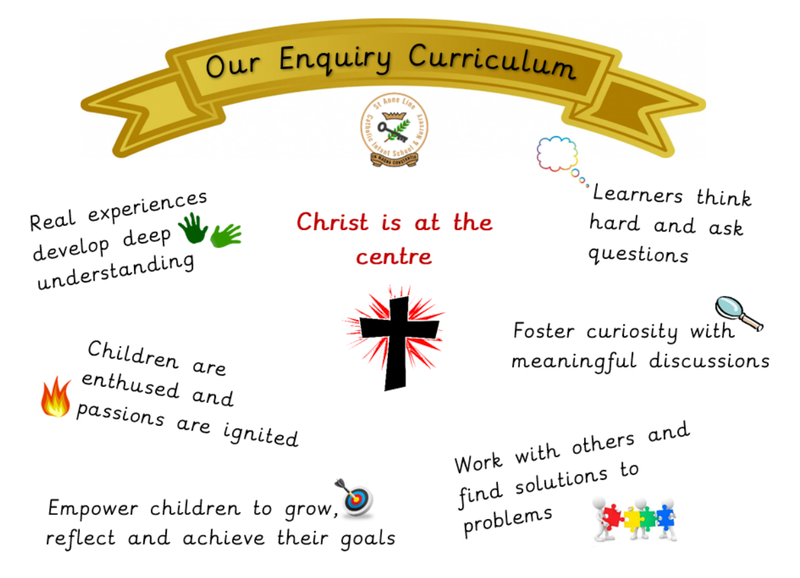
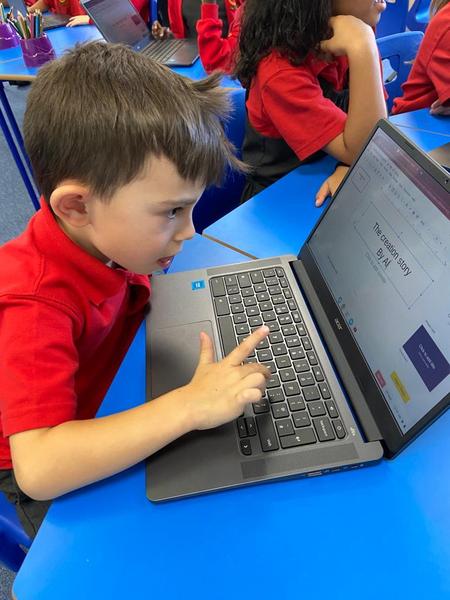
Enquiry-led (for History, Geography, Science, Computing, Art & Design and DT, in KS1) encouraging children to ask questions, investigate, and make sense of the world
-
Book-linked, using high-quality texts to provide context, inspiration, and meaningful connections across subjects
-
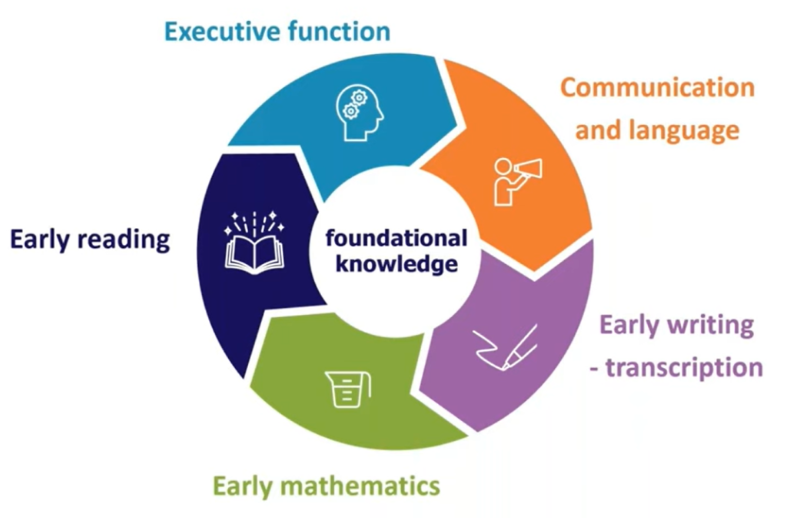
Grounded in Strong Foundations, prioritising the essential knowledge, skills, behaviours, and attitudes that prepare children for lifelong learning
-
Language-rich and communication-centred, recognising that speaking, listening, vocabulary development and meaningful dialogue are at the heart of learning. We provide purposeful opportunities for children to articulate their thinking, develop confidence in communication and deepen their understanding across the curriculum.
-
Built upon the Characteristics of Effective Learning, ensuring that children develop and strengthen the dispositions needed for success as learners. From the Early Years onwards, our curriculum nurtures children's ability to play and explore, actively engage in learning, and think critically and creatively. These characteristics are revisited and developed year by year, enabling children to become increasingly independent, resilient, reflective and confident learners.
Our curriculum nurtures:
-
Foundational skills: Reading, writing, communication, mathematics, and scientific thinking
-
Executive function and self-regulation: Working memory, cognitive flexibility, inhibitory control
-
Character development: Perseverance, resilience, creativity, responsibility, and moral understanding
Our approach ensures children:
-
Build strong, transferable knowledge and skills across all subjects
-
Develop curiosity and critical thinking through enquiry questions in all lessons
-
Learn through high-quality, purposeful books that connect directly to units of study
-
Are well-prepared academically, socially, and spiritually for the next stage of their education.
Whole School Implementation
Our curriculum starts from what children already know. Teachers:
-
Identify starting points quickly
-
Build on prior learning
-
Teach new knowledge in small, carefully sequenced steps
- Place a strong emphasis on language and communication, recognising that children learn best when they can talk about, explain, and make sense of new ideas.
- Explicitly develop vocabulary, speaking, listening, reading, and writing skills across the curriculum.
- Create regular opportunities for discussion, questioning, and purposeful talk, enabling children to articulate their thinking, deepen their understanding, and communicate with confidence.
We use the model → practise → apply approach across subjects to ensure learning is secure.
EYFS Approach
In the EYFS, our curriculum has a strong synergy between the three Characteristics of Effective Learning and the foundational knowledge required for Key Stage 1. We blend a play-based pedagogy with structured, adult-led teaching. Play is purposeful and planned with clear intent, and adults extend learning through skilled interaction. Play supports and reinforces explicit teaching, ensuring children develop curiosity, independence, and essential skills that provide a solid foundation for future learning.
KS1 Model
In Key Stage 1, learning is carefully scaffolded through subject-specific knowledge taught within creative and cross-curricular themes, supported by high-quality resources and environments that promote independence and resilience. Units are:
-
Book-linked, providing context and inspiration for enquiry and learning
-
Enquiry-led, with an overarching unit question and lesson-specific enquiry questions to stimulate curiosity, critical thinking, and reflection
-
Progressive and sequential, revisiting knowledge and skills to ensure deep understanding and confidence
-
Language-rich, with purposeful opportunities for children to develop and apply their speaking, listening, reading and writing skills across the curriculum.
Strong Foundations in Practice
We prioritise foundational skills that are explicitly taught, practised, and revisited across the school:
-
Reading and phonics
-
Writing and transcription
-
Number and calculation
-
Communication and language
-
Self-regulation and executive function
Adults model high-quality talk, vocabulary, and reasoning, supporting oral rehearsal and confidence before writing. This ensures children develop strong language skills alongside subject knowledge.
Enquiry-Led and Book-Focused Curriculum
Across all foundation subjects (Science, Art, D&T, History, Geography, Computing), learning is:
-
Enquiry-led, promoting exploration, questioning, talk, and problem-solving
-
Linked to high-quality texts, which provide context, inspiration, and purpose
-
Practical and meaningful, with opportunities for first-hand experiences, discussion, reflection, and application
Learning is hands-on and cross-curricular, connecting to RE, PSHE/RSHE, Maths, and English, ensuring pupils make meaningful links across subjects while developing both academic knowledge and life skills.
Enrichment
We enhance our curriculum for all children through:
-
Outdoor learning, trips, and visitors
-
Themed weeks (e.g., Arts Week, Science Week)
-
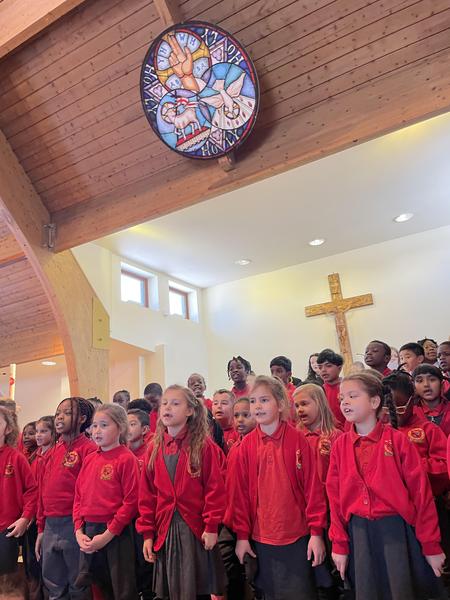
Collective worship, liturgies, and Masses
-
Pupil voice opportunities (School Council, charity projects)
-
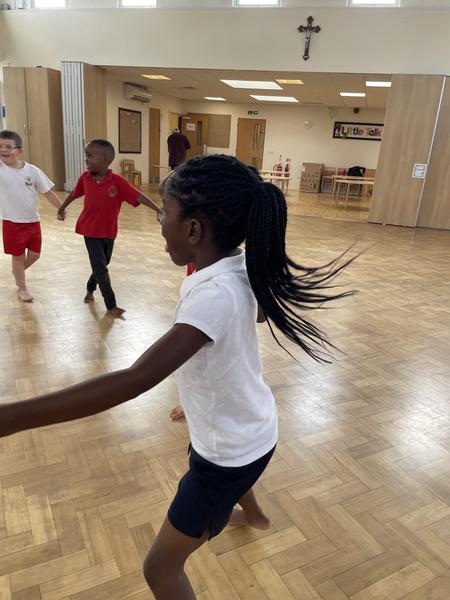
Clubs, music, PE, and extra-curricular opportunities
-
Faith-linked and cross-curricular projects that bring enquiry questions and book-linked learning to life
Whole School Impact
We measure impact across three key areas:
Emotional Development
-
Children are happy, secure, and confident
-
Positive personal development and relationships
-
Parents report positively on children’s wellbeing and confidence
Social and Spiritual Growth
-
Behaviour is exemplary; children show integrity, kindness, and respect
-
Pupils live out Love, Learn, Pray daily
-
Reflection and prayer are central to school life
Academic Achievement
-
Children achieve highly across the curriculum
-
Progress is strong for all groups, including SEND, EAL and disadvantaged pupils
-
Strong foundations ensure children are well-prepared for the next stage of education
-
Children are confident communicators
In Practice, This Means:
-
Calm, structured classrooms with clear routines
-
Purposeful play and explicit teaching
-
Strong foundation skills secured before new learning is introduced
-
Learning sequences linked coherently from EYFS to Year 2
-
Units enriched by enquiry questions and high-quality books
Our Curriculum Goal
We aim to create learners who think creatively, question deeply, and explore the world with curiosity and wonder. Our bespoke curriculum ensures:
-
Knowledge is progressively sequenced and revisited
-
Skills and understanding are built using Strong Foundations principles
-
Enquiry questions and book-linked units provide purpose, context, and inspiration
-
Children develop into confident, independent learners who will make a positive contribution to society
If you require any further information regarding the curriculum, please contact the main school office.
Paper copies of any information regarding our curriculum statements can be requested from the school office free of charge.