St Anne Line
Catholic Infant School & Nursery
English
Welcome to English at St Anne Line Catholic Infant School
“We love, we learn, we pray.”
English and
Curriculum Lead
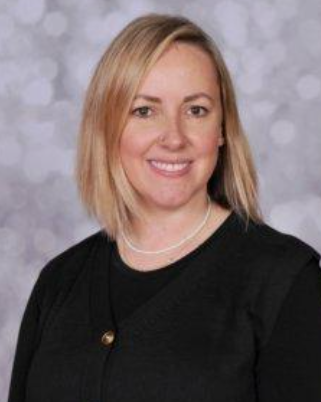
Hello and welcome to our English curriculum page! I am Mrs Warren, Deputy Headteacher and English Lead.
I am delighted to share how we teach and celebrate English at St Anne Line. As a Catholic school, our English curriculum is built upon our mission to help every child become confident, creative, and compassionate communicators, who use their voices to make a positive difference in the world.
We believe that reading and writing open the door to every subject — they allow our children to explore ideas, express their faith, and understand the beauty of God’s world and the people within it.
Our Vision for English
At St Anne Line Catholic Infant School, we consider the teaching of English to be at the heart of the school curriculum.
In our school, where a high proportion of our children speak English as an additional language, the English curriculum is designed to be inclusive, supportive, and language-rich. We focus on building strong foundations in language, reading and writing, recognising that confident communication is the gateway to success across the curriculum and beyond. Through a carefully sequenced curriculum, children develop their listening and speaking skills, become fluent and enthusiastic readers, and grow into confident writers who can communicate their ideas with clarity, creativity and purpose. The curriculum fosters communication skills, ensuring all children, regardless of their language background, have the opportunity to succeed and engage meaningfully in their learning and develop a love of language and reading.
Our golden thread is: Language → Reading → Writing → Independence
This golden thread runs through every aspect of our English curriculum and is carefully sequenced from Nursery to Year 2.
Language
We believe that language is the foundation of all learning. It is through language that children make sense of the world, build relationships, express their thoughts and develop confidence as learners. We recognise that strong communication skills underpin success not only in English, but across the entire curriculum and throughout life.
As a school with a high proportion of pupils who speak English as an Additional Language, we place the development of vocabulary and oral language at the centre of our curriculum. We are ambitious for all children and believe that every pupil deserves access to rich, challenging language regardless of their starting point. Through explicit vocabulary instruction, purposeful talk and meaningful experiences, we help children acquire the language they need to think deeply, communicate effectively and succeed academically.
From Nursery onwards, children are immersed in a language-rich environment where stories, songs, rhymes and high-quality interactions are valued and celebrated. Skilled adults model ambitious vocabulary, encourage discussion and provide opportunities for children to listen attentively, explain their thinking and articulate their ideas with increasing clarity and confidence.
Language development is woven through every aspect of school life. Through storytelling, drama, role play, discussion and shared experiences, children develop the vocabulary and communication skills needed to become successful readers, thoughtful writers and independent learners. By placing language at the heart of our curriculum, we ensure that all children are equipped with the knowledge, confidence and voice to flourish both in school and beyond.
Reading
At the heart of our reading curriculum is a passion for stories and a commitment to giving every child the tools they need to become a fluent, confident reader.
We believe that reading is one of the greatest gifts we can give our children. It opens doors to new worlds, broadens horizons and enables children to develop empathy, curiosity and a lifelong love of learning. Reading is not simply a skill to be mastered; it is the key that unlocks the entire curriculum and empowers children to flourish academically, socially and spiritually.
At St Anne Line, we recognise that language and reading are intrinsically linked. We are passionate about ensuring that all children are immersed in a rich language environment where ambitious vocabulary, meaningful discussion and high-quality texts are part of everyday school life. We want our pupils to encounter words that inspire them, stories that reflect their own experiences and texts that open their eyes to the lives of others.
In the Early Years and Key Stage 1, we use Read Write Inc. (RWI) to teach phonics in a structured and engaging way (see below for more information). This ensures that all children quickly develop the skills they need to decode accurately, read fluently and understand texts with confidence. Through daily phonics lessons and carefully matched books, children experience success from the very beginning of their reading journey.
As children progress, they are encouraged to read widely and often — from Bible stories and classic tales to poetry and modern fiction that celebrates diversity, faith and the wider world. We carefully select texts that act as both mirrors, reflecting our children's own lives and experiences, and windows, offering insight into different cultures, communities and perspectives.
We want every child to develop not only fluency but also a genuine love of reading. Through daily story time, Book Club, rich discussion and books that are woven through our curriculum, our pupils learn to think deeply, make connections and appreciate the joy that reading brings. We want children to leave St Anne Line with favourite authors, treasured stories and the confidence to see themselves as readers for life.
Writing
Our writing curriculum is built on strong foundational knowledge and ensures a clear, ambitious progression of skills across the school. From the earliest stages, pupils develop the essential building blocks of writing, including transcription (handwriting and spelling), sentence construction and vocabulary, which enable them to write with increasing fluency, accuracy and confidence.
We believe that language is the cornerstone of effective writing. Through rich discussion, storytelling, drama and explicit vocabulary instruction, children are immersed in ambitious language and are encouraged to experiment with words, phrases and sentence structures. We want our pupils to develop a genuine love of language, becoming writers who make deliberate choices about how they communicate and who take pride in expressing their ideas creatively and effectively.
Writing is taught with clear purpose and is rooted in high-quality books that model effective language, structure and composition. Teachers explicitly model the writing process, guiding pupils to plan, draft, edit and improve their work. Through our Think, Say, Write, Check approach, children learn to rehearse ideas orally before writing, developing confidence and independence as they progress through the school.
Writing opportunities are carefully planned across the curriculum and are linked to meaningful experiences, topics and books that motivate and engage learners. Children write for a range of audiences and purposes, applying their knowledge of grammar, punctuation and spelling while experimenting with vocabulary and language structures to create different effects.
Through this structured and language-rich approach, children develop independence, control and pride in their writing, learning how to communicate their ideas clearly and effectively. By the time they leave St Anne Line, our pupils see themselves as authors who write with confidence, creativity and purpose, ready for the challenges of Key Stage 2 and beyond.
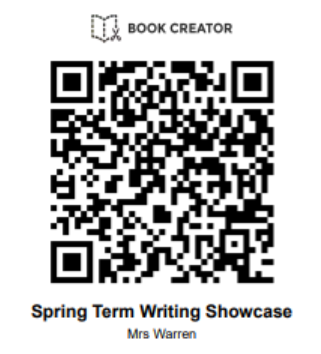
Scan the QR codes to view some of our children's amazing writing and see how much progress the children make across the year.
|
|
 |
Handwriting and Spelling
Children begin their writing journey by developing the fine and gross motor skills needed for writing through play, exploration and purposeful activities. Opportunities such as dough disco, threading, painting, mark-making and manipulating a range of tools help children develop hand strength, pencil control and coordination. Children are encouraged to make meaningful marks and begin to understand that print carries meaning, laying the foundations for handwriting and spelling in Reception and beyond.
We set high expectations for presentation, handwriting, and spelling. From the start of their school journey, children are taught correct letter formation and pencil control through Read Write Inc sessions and stand-alone handwriting lessons, progressing to fluent and joined handwriting as they move through school.
Spelling is taught systematically using the National Curriculum objectives. Dedicated spelling lessons in KS1 teach children spelling rules to apply. Children are encouraged to explore patterns, prefixes, suffixes, and word meanings — developing strong spelling habits that support confident writing. We use spelling checks rather than tests — giving children the opportunity to revisit and apply words in meaningful contexts rather than simply memorising lists. These checks help teachers identify next steps, celebrate progress, and ensure that spelling is understood, not just remembered.
Helping Your Child Learn to Read at St Anne Line Infant School and Nursery
At St Anne Line, we want every child to become a fluent, confident reader who enjoys reading. Reading opens the door to many exciting worlds and helps children become independent, lifelong learners.
We support this through:
-
Read Write Inc. (RWI): a phonics-based programme taught in school
-
Reading to your child daily: at home and in school (please see QR codes below to access Virtual Classrooms at home)
-
Access to a variety of books: both in school and at home (click on the Oxford Owl eBook Library link below and use your child's username and password in their reading records)
What is Read Write Inc. (RWI)?
RWI is a structured reading programme that helps children learn to read quickly and confidently. It focuses on phonics – learning the sounds in words – and also supports spelling, vocabulary and comprehension.
RWI was created by Ruth Miskin. You can find more information through the website link below:
How We Teach RWI
Children are grouped by ability in Reception, Year 1 and Year 2 and assessed regularly to make sure they are learning at the right level. Here’s what RWI looks like across the school:
Nursery
-
Short sessions begin at the end of the Spring term before your child enters reception.
-
We begin by introducing Fred Frog and Fred Games to help children develop oral blending. Fred Talk (e.g. c-a-t → cat)

-
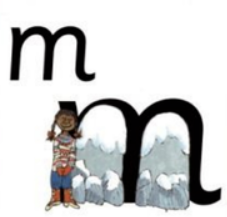
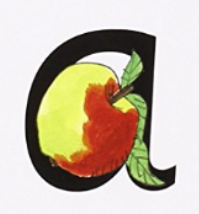
We teach children to name the picture: m....mountain a...apple etc.
-
We then introduce children to the initial sound in the RWI picture cards.
Reception
-
Learning to read and write sounds as a whole class until October half-term
-
Blending sounds to read simple words
-
Beginning to read storybooks matched to their level
-
4 x weekly 45-minute lessons after half-term in ability groups
Year 1 and Above
-
4 x weekly 45-minute lessons (speed sounds lesson and storybook lesson)
-
Learning more complex sounds
-
Moving to reading comprehension once reading is fluent
What Children Learn
Reading
-
44 sounds and matching letters or groups of letters
-
Blending sounds using Fred Talk (e.g. c-a-t → cat)
-
Reading storybooks and non-fiction that match their level
-
Building understanding by answering simple questions
Writing
-
Forming letters using fun phrases
-
Spelling words by sounding them out
-
Building sentences by saying them out loud first
Speaking
-
Working in pairs to:
-
Take turns reading and speaking
-
Share answers and ideas
-
Use new and ambitious words
-
Our Approach
RWI is built around five key principles:
-
Purpose – Every lesson has a clear goal.
-
Participation – All children are involved in every activity.
-
Praise – We celebrate effort and progress.
-
Pace – Lessons are fast-moving and focused.
-
Passion – Teachers are enthusiastic and bring lessons to life.
At St Anne Infant School, we are determined that every pupil will learn to read, regardless of their background, needs or abilities. All pupils, including the weakest readers, make sufficient progress to meet or exceed age-related expectations. We do this though:
Fidelity to the RWI programme, from sounds to fluency
Reception – make a strong start
Expertise – we build a strong, expert team to teach phonics and early reading
Decodable books – carefully matched to children’s phonic knowledge
Stories – the best (see our reading spine!)
Progress of lowest 20% – strong - and we deliver a bespoke 1:1 tuition programme, so children can 'keep up, not catch up'
Leaders ensure every child reads in their school, and teachers model reading to the children daily.
Fred Talk
To help children blend sounds into words, we use a puppet called Fred who “speaks in sounds.” For example:
-
m-o-p → mop
-
sh-o-p → shop
-
b-l-a-ck → black
This technique is called Fred Talk and helps children hear and blend sounds easily.
Please attend our phonics workshops to find out how to best support your child at home and in school and use the information below to find out more.